

Why Claim Adjudication Systems Matter for P&C Insurance
Claim adjudication systems are software platforms that automate the process of reviewing, validating, and approving P&C insurance claims to determine coverage and payment amounts. These systems handle everything from initial claim submission through policy verification, fraud detection, and final payment determination. According to the Insurance Information Institute, efficient claims handling is a cornerstone of operational success in the P&C sector.
Key components of modern claim adjudication systems include:
- Rules based engines that automate policy checks and coverage calculations
- API integration for seamless data exchange with existing systems
- Real time processing capabilities for faster claim resolution
- Automated workflows that reduce manual data entry and errors
- Audit trails for compliance and transparency
If you manage claims at a P&C insurance carrier, TPA, or IA firm, you know the pain points. Manual data entry errors delay payments. Paper claims create bottlenecks. Long verification processes frustrate policyholders and drain resources. The traditional claims process has been labor intensive and error prone. Manual adjudication involves specialists reviewing each claim by hand, which is time consuming and resource heavy. These delays hurt cash flow, customer satisfaction, and operational efficiency.
Modern systems change this equation. They process claims faster, catch errors before submission, and free your team to focus on complex cases that need human judgment. I am Alex Pezold, founder of Agentech AI, where we build the AI workforce for P&C insurance to transform claims processing with speed and accuracy. Having scaled and successfully exited TokenEx, I now focus on helping P&C carriers implement claim adjudication systems that integrate with existing workflows while delivering measurable improvements in processing time.
Essential Components of Modern Claim Adjudication Systems
Modern claim adjudication systems for P&C insurance are the backbone of efficient and profitable operations. These systems handle liability determination, policy interpretation, and payment processing across diverse P&C claim types, from residential property damage to complex workers' compensation cases.
Sophisticated claims adjudication software relies on several critical components:
- Rules Based Engine: This automates workflows for claims adjudication and benefit administration. It allows for configurable business rules custom to specific policy conditions, state regulations, and unique client agreements. A rule might automatically deny a claim if the filing limit has expired or flag a suspected duplicate for review.
- Flexible API Integration: Modern claim adjudication systems must offer robust API integration to ensure interoperability with existing enterprise systems like policy administration and billing. This allows for real time access to crucial information like enrollment records and policy details.
- Agile Technology and Scalability: P&C insurance markets evolve constantly. Our claim adjudication systems need to be built on agile technology with a service oriented architecture to ensure scalability. This means the system can grow with our business, handling increasing claim volumes without breaking.
- Automated Batch Readjudication: For claim reprocessing projects, automated batch readjudication capabilities allow us to efficiently re-evaluate groups of claims based on new information or revised rules, reducing manual effort.
- EDI Ready Software: Electronic Data Interchange (EDI) readiness is crucial for processing electronic claim submissions in real time. This ensures that claims from various sources can be ingested and processed swiftly.
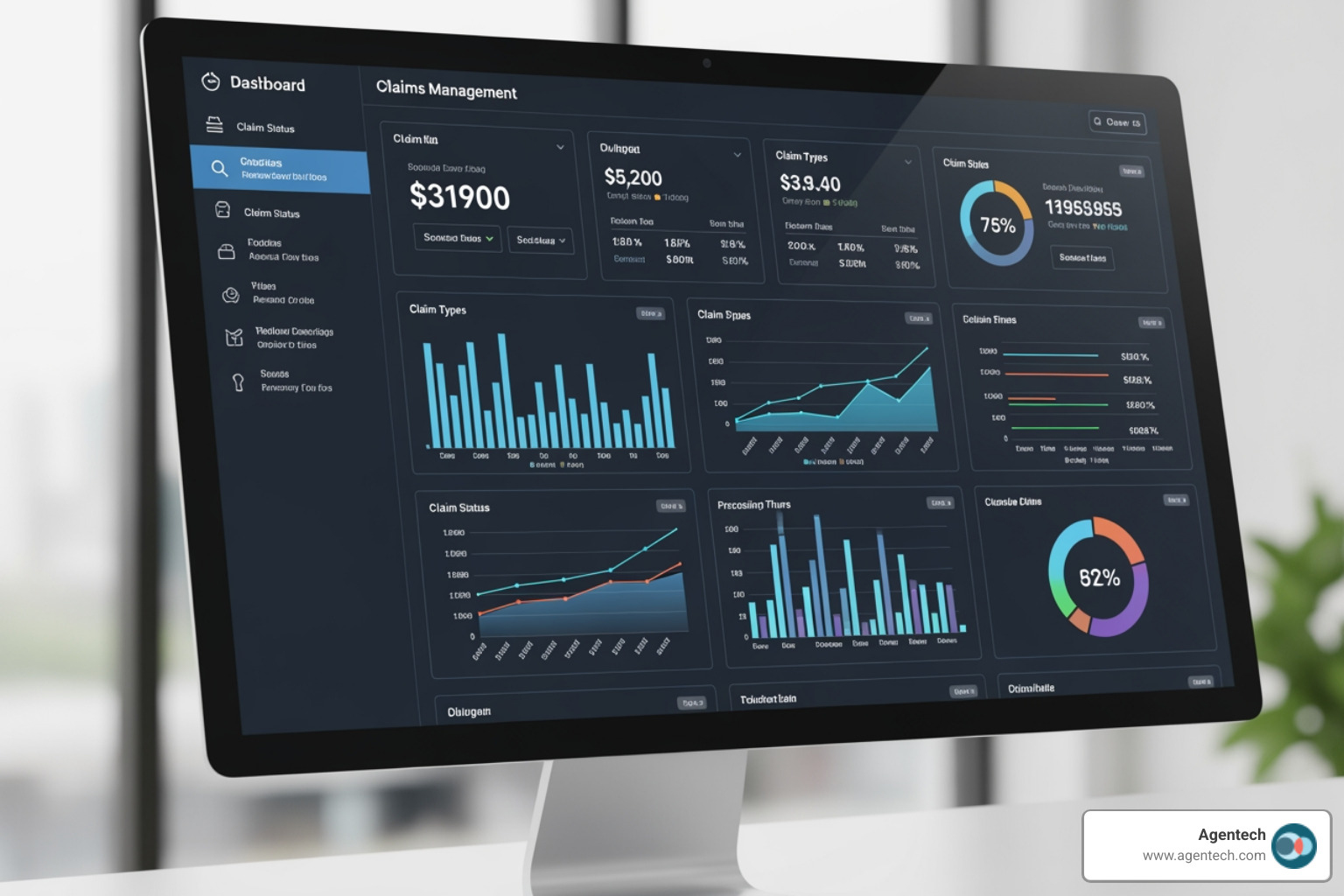
Manual vs. Automated Claim Adjudication Systems
The traditional process of adjudicating P&C claims has been labor intensive and laden with errors. Manual data entry, paper claims, and long verification processes lead to delays and fiscal issues.
- Manual Adjudication: This involves data entry specialists or claims examiners reviewing each claim by hand. It is time consuming, error prone, and resource intensive. Small mistakes like a misspelled name can cause immediate rejection, leading to payment delays that hurt cash flow and policyholder satisfaction.
- Automated Adjudication: Automated claim adjudication systems use intelligent software to process claims faster and more accurately. Our AI-Powered Claims Automation solutions can scan claims for eligibility, policy rules, and required documentation in moments. This reduces human intervention for routine claims, allowing adjusters to focus on complex cases.
| Feature | Manual Adjudication | Automated Adjudication |
|---|---|---|
| Speed | Slow, dependent on human time | Fast, real time processing |
| Accuracy | Prone to human error | High accuracy, rule driven |
| Cost | High labor and re-work costs | Lower operational costs |
| Resource Use | High human resource intensity | Lower human resource intensity |
| Scalability | Limited and difficult to scale | Highly scalable |
| Satisfaction | Often low due to delays | Higher due to faster resolution |
Critical Features for P&C Insurance Carriers
For P&C insurance carriers, TPAs, and IA firms, selecting the right claim adjudication systems means looking for features that cater to residential property, auto insurance, workers' compensation, and pet insurance claims. Our Insurance Claims Solutions are designed with these needs in mind.
Key features include:
- Configurable Business Rules: The ability to easily configure rules for different lines of business, such as specific deductibles for auto versus property.
- Comprehensive Data Integration: Seamless connection with various data sources, including policy administration systems and external databases for property records.
- EDI Readiness: The ability to send and receive claims data electronically in industry standard formats.
- Fraud Detection Capabilities: Integrated tools that leverage data analytics and AI to identify suspicious patterns.
- Workflow Automation: Automating related tasks like notification generation and document routing.
- Audit Trails and Reporting: Detailed logging of every action and decision made within the system for transparency and compliance.
Step by Step Evaluation of the Adjudication Workflow
Understanding the workflow of claim adjudication systems is essential for evaluating effectiveness. Every step needs to be optimized for efficiency and accuracy. Our Insurance Workflow Automation solutions focus on streamlining this entire process.
- Claim Submission: A policyholder or provider submits a claim detailing the incident. For P&C insurance, this includes photos of a damaged car or medical reports for a workers' compensation injury. The system must ingest data from web portals, EDI feeds, or manual entry.
- Initial Validation and Scrubbing: The system performs an initial check for completeness. It verifies policyholder demographics and policy numbers. Our claims scrubbing tools recognize potential issues before submission, flagging missing information.
- Policy Verification and Eligibility: The system cross references the claim against the active policy to confirm coverage, deductibles, and limits relevant to the incident.
- Liability Determination: For P&C claims, this involves determining fault and the extent of damage. The system uses rules to assess factors like accident details for auto claims or peril types for property claims.
- Fraud Detection: Integrated analytics and AI tools scan for patterns indicative of fraud, such as unusual claim timing or inconsistent narratives. Flagged claims are routed for human review.
- Adjudication and Pricing: The system applies predefined rules to calculate the allowed amount based on policy terms and provider contracts. For P&C insurance, this involves assessing repair costs or medical expenses.
- Payment Determination: Based on the adjudication outcome, the system determines the final payment amount and initiates the payment process.
- Explanation of Benefits (EOB): The system generates documents explaining the payment decision to the policyholder and the provider, ensuring transparency.
Integrating AI into Claim Adjudication Systems
AI and Machine Learning (ML) are transformative forces in claim adjudication systems. They allow us to move beyond simple automation to intelligent automation. Our Insurance Claims Machine Learning solutions are at the forefront of this change.
- Pattern Recognition: AI excels at analyzing large datasets to pick out inconsistencies and predict denials before claims are submitted. In workers' compensation, AI can identify unusual billing patterns from a medical provider.
- Automated Data Extraction: AI powered Optical Character Recognition (OCR) can automatically extract data from unstructured documents like repair estimates and police reports. This reduces manual data entry errors.
- Denial Prediction: By analyzing historical data, AI can predict which claims are likely to be denied, allowing teams to address issues proactively.
- Intelligent Routing: AI can analyze claim characteristics to route them to the most appropriate adjuster or prioritize high value claims.
- Adjuster Productivity: AI improves adjuster productivity by automating repetitive administrative tasks. Our Application Overview demonstrates how AI can become a digital co-worker, boosting efficiency without replacing human decision making.
Communication and Collaboration Tools
Effective communication is the secret to streamlining claim adjudication systems, especially when working with TPAs and IA Firms. Modern systems address this by incorporating features like:
- Claimant Portals: Empowering policyholders with secure online portals to submit documents and track claim status reduces inbound calls. For P&C insurance, this means uploading photos of damage or repair estimates.
- Automated Notifications: The system can automatically send notifications to policyholders and adjusters at key stages of the adjudication process.
- Integrated Communication Channels: Features like secure messaging within the claims management software and AI driven chatbots for routine inquiries streamline interactions.
- Shared Workspaces: Providing a centralized platform where all parties can access relevant claim documents fosters transparency. Our Insurance Process Management solutions facilitate this interaction.
Technological Innovations in P&C Claims Software
The landscape of P&C claims software is undergoing rapid digital change. This is about reimagining the entire claims process through innovative technology. Our AI for Insurance Operations solutions are at the forefront of this change.
Key technological innovations include:
- Real Time Processing: Moving beyond batch processing to real time adjudication allows claims to be processed almost instantaneously. This is impactful for high volume, low complexity claims like auto or pet insurance.
- Cloud Based Architecture: Modern claim adjudication systems are built on cloud platforms, offering scalability and accessibility for P&C carriers, TPAs, and IA firms.
- Predictive Analytics: Beyond denial prediction, AI and ML are used to forecast claim severity and identify subrogation opportunities.
- Intelligent Automation: Combining Robotic Process Automation (RPA) with AI allows for end to end automation of entire workflows, from data intake to payment initiation.
- Advanced Data Integration: Integrating with IoT devices, such as telematics for auto or smart home sensors for property, provides real time data about incidents.
Enhancing Accuracy with Claim Adjudication Systems
Accuracy is the cornerstone of effective claim adjudication systems. Errors lead to financial losses and dissatisfied policyholders. Modern systems leverage advanced technologies to ensure data consistency. Our AI Claims Processing Complete Guide explores this in depth.
- Automated Data Validation: Systems perform rigorous checks for completeness and consistency at the point of entry. This catches discrepancies like mismatched policy numbers before they cause delays.
- Rules Based Consistency: By applying predefined business rules, the system ensures every claim is evaluated against the same criteria, eliminating human variability.
- AI Powered Anomaly Detection: AI algorithms monitor for unusual patterns that might slip past traditional rule sets, such as inflated repair costs.
- Comprehensive Audit Trails: Every action and decision within the system is logged, creating an immutable record for transparency and compliance.
- External Data Sources: Connecting with external databases provides additional context and validation points for adjudication decisions.
The Role of Digital Co-workers
At Agentech, we believe in the power of digital co-workers to revolutionize the P&C insurance industry. These are intelligent AI agents designed to integrate into existing workflows, handling administrative tasks that bog down human adjusters. Our Virtual AI Assistants for Insurance are a prime example.
Digital co-workers in claim adjudication systems help by:
- Automating Administrative Tasks: AI agents can compile medical summaries for workers' compensation claims or extract details from documents, reducing manual effort.
- Enhancing Data Accuracy: Digital co-workers ensure data is extracted and entered consistently, minimizing manual entry errors.
- Accelerating Workflow: By handling routine checks, AI agents speed up the initial stages of adjudication.
- Supporting Human Decision Making: Digital co-workers provide adjusters with pre-analyzed information and flag potential issues, enabling quicker decisions. This allows adjusters to focus on complex scenarios and provide empathetic service to policyholders.
Financial Impact and ROI of Automated Solutions
The financial benefits of implementing automated claim adjudication systems are substantial. They directly impact the revenue cycle and overall financial performance for P&C insurance organizations.
- Reduced Operational Costs: Automating claims adjudication cuts down on labor costs associated with data entry and manual reviews. Our Reduce Administrative Burden solutions are designed for this.
- Accelerated Cash Flow: Faster claim processing leads to quicker payouts and improved cash flow management. It also improves policyholder satisfaction, reducing churn.
- Increased Accuracy: Automated systems catch errors before submission, leading to a higher first pass resolution rate and fewer denied claims. This reduces the cost of appeals.
- Optimized Resource Allocation: By automating routine tasks, human resources can be reallocated to complex activities like fraud investigation or subrogation.
- Accelerated ROI: Leveraging automated claims adjudication software is a major step toward processing claims with speed and accuracy, eliminating duplication errors for an accelerated ROI.
Implementing robust Insurance Back Office Automation is a strategic investment that pays dividends through efficiency gains and cost reductions.
Reducing Operational Leakage
Operational leakage is a silent killer of profitability in P&C insurance. Automated claim adjudication systems are powerful weapons against this leakage.
- Eliminating Duplicate Errors: Automated systems virtually eliminate costly mistakes like entering the same claim twice through rigorous validation.
- Preventing Fiscal Issues: Automation plugs leaks by ensuring claims are processed correctly the first time, avoiding unnecessary administrative overhead.
- Optimized Resource Allocation: Automation frees up adjusters to focus on high impact activities like complex liability investigations. Our Faster Claims Resolution Tools are designed to achieve this.
- Improved Compliance: Automated systems enforce compliance rules consistently, minimizing the risk of penalties and protecting the organization's reputation.
Strategic Outsourcing vs. In-house Automation
P&C insurance organizations often face a buy versus build decision regarding claim adjudication systems. Our Buy vs Build: Navigating the SaaS AI Technology Decision article digs deeper into this.
- Advantages of Outsourcing: This provides immediate access to specialized technologies and experts without significant upfront investment. It can reduce administrative costs by shifting the technology burden to a third party.
- Advantages of In-house Automation: We maintain full control over our data and processes, allowing for deep customization. Investing in our own automation capabilities builds internal expertise and a proprietary technological edge. With partners like Agentech, our solutions are designed for seamless integration with existing IT systems, ensuring a unified claims ecosystem.
The best path depends on an organization's specific needs and strategic vision. For those looking to own their digital change, in-house automation with the right technology partner is often the most powerful route.
Frequently Asked Questions
What are the main challenges in traditional adjudication?
The main challenges in traditional claim adjudication systems stem from their manual nature. Manual data entry, paper claims, and long verification processes create significant bottlenecks. These issues are costly, leading to errors and workflows prone to inconsistencies and denials. It is a system that historically has drained resources and slowed the claims lifecycle.
How does automation impact adjuster productivity?
Automation transforms adjuster productivity by handling repetitive administrative tasks. Our AI driven solutions are AI Designed with Adjusters in Mind. This means adjusters spend less time on data entry and more time on complex investigations and negotiating settlements. It enables faster file review and allows adjusters to focus their expertise where it is needed most.
Why is real time processing important for P&C insurance?
Real time processing is paramount because it impacts policyholder satisfaction and accelerates ROI. Policyholders expect swift resolution for urgent claims like auto accidents. Digital Claims Processing enables immediate validation for many claims, leading to faster payouts. This speed reduces administrative overhead and ensures resources are allocated efficiently, driving a competitive advantage.
Conclusion
Navigating the complexities of claim adjudication systems in the P&C insurance world requires a strategic approach. These systems are about changing financial performance, enhancing policyholder satisfaction, and empowering teams.
The future of claims is intelligent and automated. By embracing modern solutions with robust rules engines and AI capabilities, we can move beyond the inefficiencies of traditional manual processes.
At Agentech, we are committed to helping P&C carriers, TPAs, and IA firms make this transition. Our digital co-workers and AI Agents offer a blend of cutting edge AI and seamless integration, designed to boost adjuster productivity. We believe in an ecosystem where technology improves human potential, allowing us to focus on serving policyholders with speed and empathy. The right claim adjudication systems are a partner in our success.
Citations:
- MDI Focus. "Streamlining Claims Adjudication: Best Practices and Advanced Solutions." Healthcare Technology Blog.
- PLEXIS Healthcare Systems. "Sophisticated claims adjudication software on a powerful payer platform." Healthcare IT Solutions.
- QuickCap. "Understanding Claims Adjudication: How Does it Work?" Medical Billing Resources.
- Aptarro. "Top 10 Medical Claims Software for 2026." Healthcare Management Technology.
- Oracle Health Insurance. "Claims Adjudication and Pricing Application Overview." Technical Documentation.
- CDCS. "Claims Adjudication Services." Healthcare Administration Services.