
Why Insurance AI Technology is Revolutionizing Claims and Underwriting

Insurance ai technology is changing how Property & Casualty insurers handle everything from claims processing to risk assessment. Here's what P&C carriers, TPAs, and Independent Adjusting firms need to know:
Key Applications of AI in P&C Insurance:
- Claims Processing: Automate document review, damage assessment, and settlement calculations
- Underwriting: Analyze risk data from hundreds of sources in minutes instead of days
- Fraud Detection: Identify suspicious patterns in claims and applications
- Customer Service: Deploy 24/7 chatbots for policy inquiries and first notice of loss
- Risk Assessment: Process unstructured data from photos, reports, and third party sources
Proven Results:
- Reduce underwriting decision time from three to five days to 12.4 minutes
- Achieve 99.3% accuracy in standard policy risk assessment
- Cut claims processing time by up to 50% while improving accuracy
- Generate productivity gains of 30% or more for service teams
The technology works by digitizing risk information from multiple sources and formats into computer readable data that machines can analyze and process. This allows P&C insurers to make faster, more consistent decisions while freeing up adjusters and underwriters to focus on complex cases that require human judgment.
Underwriters at companies like Allianz have long faced the challenge of finding specific answers across hundred page documents before making competitive offers. Today's insurance AI technology solves this by automatically parsing, evaluating, and mapping information from disparate sources into actionable insights.
I'm Alex Pezold, and I've spent years building technology solutions that scale in complex industries, including my successful exit of TokenEx in 2021. At Agentech AI, I'm focused on how insurance ai technology can transform claims processing with AI driven automation that improves rather than replaces human expertise.
How AI is Changing P&C Underwriting and Operations
The shift from manual to automated processes in Property and Casualty insurance isn't just happening. It's already here, and it's changing how we work every single day.
Picture this: an underwriter at a major P&C carrier used to spend hours digging through hundred page documents, searching for that one critical piece of information needed to make a competitive offer. Today, insurance ai technology handles that heavy lifting in minutes, not hours. The technology excels at data analysis and pattern recognition, turning what used to be tedious manual work into streamlined workflows that actually make sense.
What makes this revolution particularly exciting is how AI enables automated decision making without removing the human element entirely. Instead of replacing underwriters and adjusters, AI amplifies their expertise. It processes vast amounts of information from residential property assessments, auto claims photos, pet insurance applications, and workers' compensation reports, then presents the insights in a way that helps professionals make better decisions faster.
The results speak for themselves. P&C carriers using AI are seeing dramatic improvements in operational efficiency. Claims that once took days to process now move through the system in hours. Underwriting decisions that required multiple meetings and reviews can often be completed in a single session. Industry analysis reveals just how widespread these changes have become across the P&C insurance sector.
The Core of Modern Insurance AI Technology: Risk Digitization
Here's where things get really interesting. The secret sauce behind modern insurance ai technology is something called risk digitization. Think of it as teaching computers to read and understand Property and Casualty insurance documents the same way an experienced adjuster would.
Risk digitization is the process of taking information from disparate data sources and converting it into a computer readable format. Whether the data comes from a scanned police report, an email from a contractor, a smartphone photo of hail damage, or a medical record, AI can extract the important details and organize them into decision ready risks.
The magic happens when AI processes unstructured data that would normally require human interpretation. A claims adjuster might receive dozens of documents for a single workers' compensation case, each in a different format. Risk digitization technology automatically parses all that information, identifies the key facts, and presents them in a unified view.
At Agentech, our approach to risk digitization focuses specifically on claims processing. We've designed our AI to understand the nuances of First Notice of Loss reports, damage assessments, and all the supporting documentation that comes with P&C claims. The goal is simple: turn chaotic paperwork into clear, actionable information that helps adjusters do their best work.
Enabling Platforms for AI Adoption
The beauty of modern AI platforms is that you don't need to build everything from scratch. Cloud based AI platforms have made it possible for Property and Casualty carriers, TPAs, and IA firms to deploy sophisticated AI tools without massive IT projects or years of development.
These platforms handle the complex work of scaling AI models and managing the infrastructure needed to process thousands of claims simultaneously. They provide the foundation that makes simplified deployment possible, so insurance professionals can focus on what they do best rather than wrestling with technology.
The real game changer comes with seamless integration into existing workflows. Addressing underwriting challenges becomes much more manageable when AI tools work alongside the claims management software that teams already know and use.
For Property and Casualty carriers, TPAs, and IA firms, this integration approach means AI improvement doesn't disrupt daily operations. Instead, it quietly makes everything work better. Adjusters can access AI insights directly within their familiar claims management software interface, getting the benefits of advanced automation without learning entirely new systems.
The key is choosing AI solutions that complement rather than complicate existing processes. When done right, the technology becomes invisible to end users while dramatically improving speed, accuracy, and consistency across residential property, auto, pet, and workers' compensation claims.
The Tangible Benefits: AI vs. Traditional Underwriting
The change that insurance ai technology brings to Property and Casualty insurance isn't just theoretical. It's happening right now, and the numbers are impressive. We're seeing real Property and Casualty carriers, TPAs, and Independent Adjusting firms achieve remarkable improvements in how they handle everything from residential property claims to workers' compensation cases.
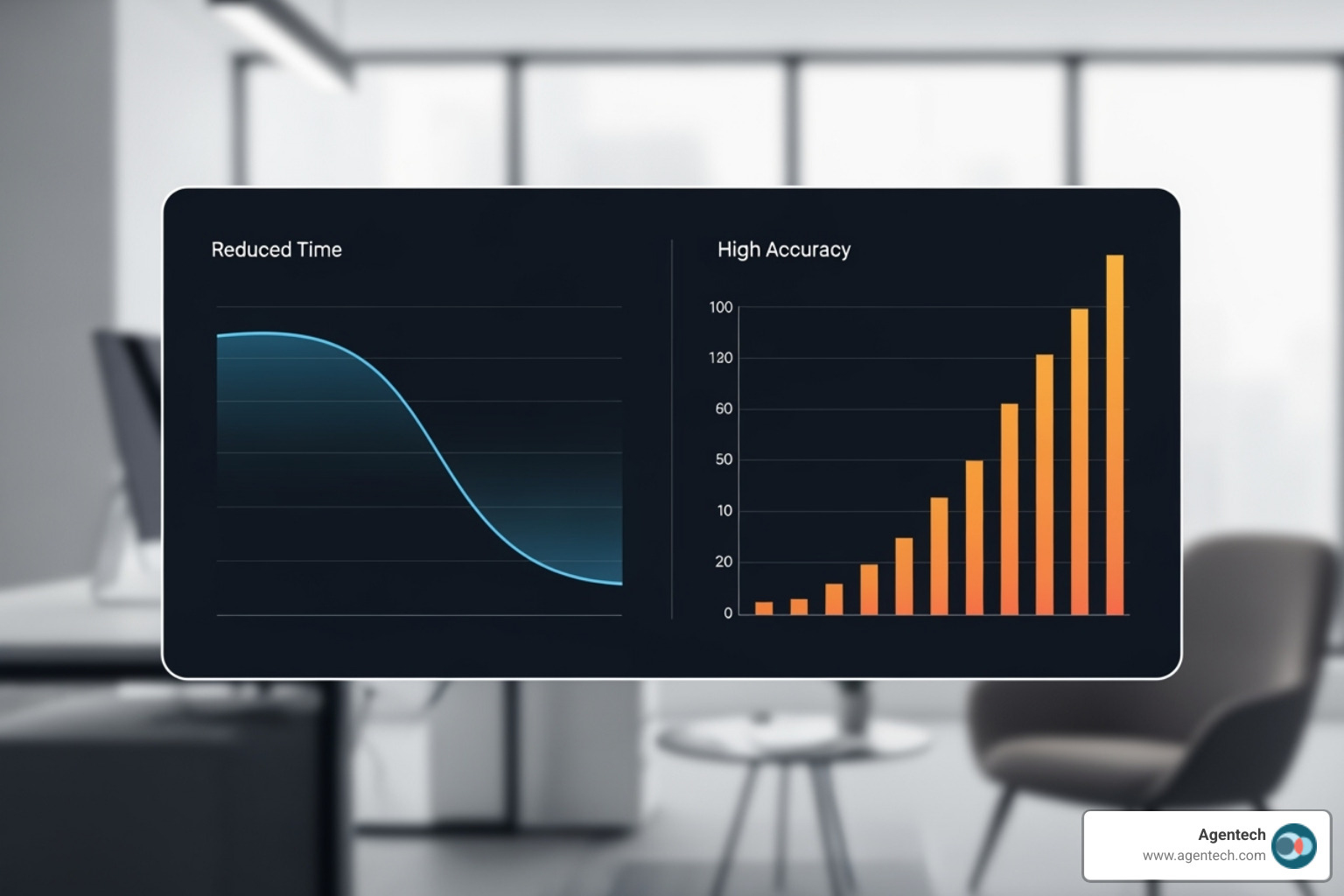
The benefits show up in ways that matter most to your bottom line: speed improvements that keep customers happy, accuracy rates that reduce costly mistakes, productivity gains that let your team focus on complex cases, loss ratio improvements that directly impact profitability, and cost reductions that make your operations more competitive.
Here's what's particularly exciting: efficiency in complex lines of business can improve by as much as 36% through AI. That's not a small tweak; that's a game changer. We're also seeing up to a 3 percentage point loss ratio improvement when P&C carriers use AI to make better sense of their data during underwriting. And productivity? Teams equipped with AI powered tools are seeing gains of more than 30%.
A New Era of Speed and Accuracy
Remember when underwriting a standard policy meant waiting three to five days for a decision? Those days are quickly becoming history. Thanks to insurance ai technology, that same process now takes an average of just 12.4 minutes while maintaining an impressive 99.3% accuracy rate. Technical analysis of AI's impact documents just how dramatic this shift has been.
But it's not just about speed. The accuracy improvements are equally compelling. For complex policies that traditionally required weeks of careful review, AI has reduced processing times by 31% and improved risk assessment accuracy by 43%. This matters enormously when you're dealing with intricate residential property cases or complex workers' compensation claims where getting the details right can make or break your loss ratios.
What this means for your customers is faster responses and better service. What it means for your team is the ability to handle more cases without sacrificing quality, and the freedom to spend time on the complex situations that truly need human expertise.
TABLE comparing Traditional vs. AI Powered Underwriting in P&C Insurance
| Metric | Traditional Method | AI Powered Method |
|---|---|---|
| Decision Time | Three to five days | 12.4 minutes |
| Data Sources | Limited, structured | Vast, structured & unstructured |
| Consistency | Variable, human dependent | High, rule based |
| Risk Assessment | Subjective, experience based | Data driven, predictive |
| Efficiency | Manual data entry, high admin | Automated, streamlined |
Navigating the Problems: Challenges and Ethics of Insurance AI Technology
While insurance ai technology offers incredible benefits, we need to talk honestly about the challenges it brings. As an industry built on trust, we have a responsibility to understand and address these issues head on.

The numbers tell an interesting story. While 64% of agency principals are curious about how AI can improve their business, only 17% of agents actually trust the technology. That's a huge gap we need to bridge through education and transparency.
Cybersecurity concerns keep many Property and Casualty insurance executives up at night. The potential for data breaches with AI technology ranks as a top business risk. When you're handling sensitive policyholder information across residential property, auto, pet, and workers' compensation claims, security isn't optional.
Data privacy and regulatory oversight have become even more critical. The NAIC has stepped up with principles and guidelines for responsible AI use, recognizing that we need guardrails as we innovate. It's about balancing innovation and regulation so AI serves our industry responsibly rather than recklessly.
The Critical Challenge of Algorithmic Bias
Here's where things get really serious. Algorithmic bias might be the biggest ethical challenge facing insurance ai technology today. The problem is simple but profound: AI systems learn from historical data, and if that data contains biases, the AI will too.
Think about it this way. Traditional Property and Casualty insurance underwriting has relied on factors like age, location, or marital status. These seem neutral enough, but they can correlate with socioeconomic disparities in ways we didn't fully understand before. When AI learns from this biased training data, it can make unfair risk assessments that hurt certain groups of policyholders.
A 2021 PwC survey on business risks showed growing concern among business leaders about these ethical implications. The worry is real: instead of helping us make fairer decisions, AI could end up perpetuating systemic inequities on a much larger scale.
Traditional criteria limitations become magnified when AI processes thousands of decisions per day. What was once an occasional unfair outcome could become a systematic problem affecting entire communities.
Ensuring Fairness and Transparency
Fighting bias isn't a one time fix. It requires ongoing vigilance and the right approach from day one. We need to start by interrogating data before it ever reaches our AI systems. This means understanding where our data comes from, how it was collected, and what hidden patterns it might contain.
Eliminating potential biases means going beyond traditional risk factors to consider broader data points for more equitable assessments. Instead of relying on narrow criteria that might disadvantage certain groups, we can use AI to consider a fuller picture of risk.
The NAIC guidelines provide a solid foundation for responsible AI governance. These aren't just suggestions; they're becoming the standard for how Property and Casualty carriers should approach AI implementation.
At Agentech, we believe transparency matters. Our claims management software is designed so adjusters can understand how AI reaches its recommendations. No black boxes, no mysterious decisions. When an AI assistant suggests something, our users can see the reasoning behind it.
The industry is taking this seriously. Companies are actively working to ensure their AI systems promote fairness rather than perpetuate old problems.
This commitment to fairness and transparency isn't just good ethics. It's good business. Trust is the foundation of Property and Casualty insurance, and AI needs to strengthen that trust, not undermine it.
AI in Action: Real World Use Cases and Future Outlook
The practical applications of insurance ai technology are already changing how Property and Casualty carriers, TPAs, and Independent Adjusting firms handle their daily operations. What once seemed like science fiction is now powering real workflows across residential property, auto, pet, and workers' compensation lines.

Claims processing has become one of the most impactful areas for AI implementation. Modern claims management software can automatically sort through photos of auto damage, extract key information from medical records, and pull relevant data from invoices and repair estimates. This means adjusters spend less time on paperwork and more time actually helping policyholders get their lives back on track.
Customer service chatbots are handling routine inquiries around the clock, helping policyholders report claims at 2 AM or check their coverage details on weekends. Meanwhile, marketing personalization uses AI to analyze customer data and create targeted communications that actually resonate with different policyholder segments. Perhaps most importantly, fraud detection systems are getting smarter at spotting suspicious patterns that human reviewers might miss, protecting both insurers and honest policyholders from the costs of fraud.
How Leading P&C Carriers Leverage AI
The P&C insurance industry has moved well beyond pilot programs. Many companies are now using AI as guidance tools for underwriters, helping them steer complex risk assessments with greater confidence and speed. These systems act as a second set of eyes for claims and underwriting, catching important details that might otherwise slip through the cracks.
The challenge of cracking complexity in risk assessment is where AI truly shines. Consider the traditional struggle of finding specific information buried in hundred page commercial property submissions. AI can instantly locate relevant details about fire suppression systems, building materials, or previous claims history, turning what used to be hours of document review into minutes of focused analysis.
What's particularly encouraging is that these tools aren't replacing human expertise. Instead, they're amplifying it. Underwriters can now spend their time on the nuanced judgment calls that require human insight, while AI handles the data extraction and initial analysis. This partnership between human intelligence and artificial intelligence is creating better outcomes for everyone involved.
Future Trends in Insurance AI Technology: From Generative to Agentic
The evolution of insurance ai technology is accelerating toward what experts call a predict and prevent model. Rather than simply responding to claims after they happen, industry analysis envisions AI systems that can anticipate risks and help prevent losses before they occur.
We're moving from today's generative AI tools, which excel at creating content and summarizing information, toward autonomous agents that can handle complex, multi step processes independently. These multi agent systems represent a fascinating development where different AI agents collaborate on a single task. Picture this: one agent extracts data from a claim submission, another assesses the damage from photos, a third checks policy coverage, and a fourth drafts initial communications with the policyholder.
The key principle driving this evolution is human in the loop design. By definition, these advanced systems are built to work alongside human professionals, not replace them. They handle the repetitive, rules based tasks that consume so much time today, freeing up adjusters and underwriters to focus on the complex problem solving and customer care that require human judgment and empathy.
This isn't about creating a fully automated future. It's about creating a more efficient and satisfying work environment where technology handles the tedious parts of the job, allowing insurance professionals to do what they do best: help people when they need it most.
Conclusion
The change of Property and Casualty insurance through insurance ai technology represents more than just technological progress. It's a fundamental shift in how we serve policyholders and protect what matters most to them.
Throughout this journey, we've seen how AI has moved from science fiction to practical reality. Today's Property and Casualty carriers, TPAs, and IA firms are already experiencing the tangible benefits: underwriting decisions that take minutes instead of days, claims processing that's both faster and more accurate, and operational efficiency that seemed impossible just a few years ago.
Yet perhaps the most important insight is that AI works best when it augments rather than replaces human expertise. The technology excels at parsing through hundreds of pages of documents, identifying patterns in vast datasets, and handling repetitive administrative tasks. This frees up our skilled underwriters and adjusters to focus on what they do best: making nuanced decisions, building relationships with policyholders, and handling complex cases that require human judgment and empathy.
The challenges we've discussed, particularly around algorithmic bias and ethical implementation, remind us that with great power comes great responsibility. Ethical implementation is key to ensuring AI serves all policyholders fairly, regardless of their background or circumstances. Transparency, continuous monitoring, and human oversight aren't just nice to have features, they're essential components of any responsible AI strategy.
At Agentech, we're committed to this vision of AI as a powerful ally for P&C insurance professionals. Our claims management software and AI powered automation tools are designed to seamlessly integrate into existing workflows, providing that always on support that boosts productivity without disrupting the human centered approach that defines great insurance service. Whether you're processing residential property claims, handling auto accidents, managing pet insurance claims, or dealing with workers' compensation cases, our goal is to help you work smarter, not harder.
The future of insurance ai technology is bright, and it's already here. From generative AI that can summarize complex documents to agentic AI systems that can handle multi step processes autonomously, we're entering an era where technology truly serves human needs. The question isn't whether AI will transform Property and Casualty insurance, it's how quickly and effectively your organization will accept these tools to better serve your policyholders.
We invite you to explore AI Agents for your P&C operations and find how Agentech can help you steer this exciting change. Together, we can build a more efficient, accurate, and equitable future for Property and Casualty insurance.